I Switched to the Rokid Max 2 and Here is What Happened
Introduction
The reviewer decided to replace the primary laptop display with a Rokid Max 2 for several weeks to understand what it is like to live and work inside a head-mounted display instead of relying on a conventional laptop screen. This article explains the experience in an objective, editorial tone: what the Rokid Max 2 does well, where it still falls short compared to traditional laptops, and which buyers should consider this device. The goal is to give readers practical guidance grounded in real-world use cases—remote work, travel, media consumption, casual gaming, and productivity—so they can decide whether a shift toward wearable displays makes sense for their needs.
What the Rokid Max 2 Is (and Isn't)
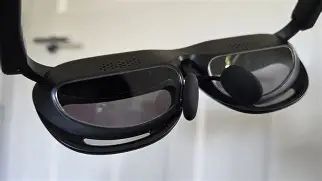
The Rokid Max 2 is a head-worn display system designed to provide a large virtual workspace without the physical footprint of a monitor. It is a wearable interface that recreates one or more high-resolution virtual screens in front of the user’s eyes and routes audio through internal speakers or a connected audio device. It is not a conventional laptop: it lacks an integrated keyboard, touchpad, or full physical I/O. Instead, it complements or replaces displays by projecting virtual monitors, relying on the user’s existing input devices or companion apps for control.
Design and Comfort
Design matters for anything worn on the head. The Rokid Max 2 takes a modern, industrial approach: it aims to balance optics, weight distribution, and adjustability. The reviewer found the fit to be comfortable enough for multi-hour sessions with periodic breaks, but comfort will vary by head shape and whether the user already wears eyeglasses. For long stretches—coding sprints, long-form writing, or binge-watching—short rest breaks are still advisable to avoid neck strain and visual fatigue. The device includes adjustments for interpupillary distance and ergonomics that help reduce headaches for many users.
Build materials and finish feel premium relative to many consumer wearables. The headband and padding are pragmatic rather than luxurious, emphasizing durability. For frequent travelers, the Rokid Max 2’s form factor is an obvious advantage: it can create a large-screen experience on an airplane or in a hotel room without unpacking an external monitor.
Display and Optics
One of the Rokid Max 2’s strongest selling points is the immersive, high-contrast display it produces. The reviewer noticed a level of screen real estate that would normally require multiple physical monitors. That makes multitasking—reference material on one virtual screen, a document or IDE on another—much easier in tight spaces. Text clarity and color fidelity were generally good for productivity and media consumption, although individual perception varies and calibration options are more limited than on a dedicated monitor.
Like all near-eye displays, the Rokid Max 2 introduces a different set of visual trade-offs. Depth cues and perceived screen distance can help reduce eye rotation, but some users reported mild motion or focus strain during extended reading sessions. The reviewer recommends using the device’s brightness and contrast settings conservatively in low-light environments, as high brightness near the eyes can increase fatigue.
Connectivity and Performance
Performance depends less on the headset itself and more on how it is connected. The Rokid Max 2 can function as a display for a laptop, a desktop, or a smartphone depending on the available connection options (USB-C, wireless casting, or dedicated adapters). In practice, wired connections offered the smoothest frame delivery for video playback and fast-moving content. Wireless casting was convenient and worked well for static tasks and streaming, but occasional latency and frame drop were noticeable under heavy network load.
Shop the latest Laptops & Computers picks on Amazon.
See Deals →The reviewer paired the Rokid Max 2 with a variety of source devices. For office-style work (documents, spreadsheets, video calls), the experience was essentially the same as using a standard external monitor. For creative work that demands color accuracy or fine detail (photo editing, high-end video color grading), the Rokid Max 2 performed well for rough work but could not fully replace a color-calibrated studio monitor.
Software, Ecosystem, and Usability
A device like the Rokid Max 2 succeeds or fails based on ecosystem support. The reviewer found the companion software reliable for basic display mirroring and for managing multiple virtual screens. Integration with common operating systems worked without major issues, and the device supported customary workflows such as screen extension and duplication.
However, ecosystem limitations became apparent in niche scenarios. Some pro-grade applications do not scale well to virtual displays, and multi-monitor window management could be less fluid than on a conventional multi-monitor desktop with an established window manager. Voice commands and gesture controls are present in the platform but are supplemental—physical inputs (keyboard and mouse) remain the primary and most productive way to work.
Audio, Camera, and Privacy
In-built speakers and spatial audio can make video calls more immersive and presentations more engaging, but they are not a full replacement for high-quality headphones for detailed audio work. The head-tracked audio environment enhances immersion during media playback, which many users will appreciate.
Privacy concerns are worth considering. Wearing a head-mounted display alters how conversations and notifications are handled: virtual screens can display content only visible to the wearer, which is a privacy advantage in public spaces. On the flip side, wearing a visible headset can draw attention in meetings or on public transit. The reviewer recommends readers weigh these social and privacy trade-offs when choosing to use wearable displays outside the home or office.
Battery Life and Portability
Battery life varies by usage pattern. When used as a portable second screen with screen mirroring or wireless casting, the reviewer experienced several hours of continuous use before needing a recharge. Heavy media playback, higher brightness settings, and continuous wireless casting shortened runtime. For extended sessions, keeping a power bank or a nearby outlet is advisable.
Portability is a clear advantage: the Rokid Max 2 eliminates the need to carry a separate monitor. For commuters or people working from multiple locations, that convenience is a major selling point. The device’s carrying case and relatively compact footprint make it an attractive option for minimalists and road warriors.
Discover deals on Laptops & Computers — updated daily.
Browse Now →Real-World Use Cases
To ground the review in practicality, the reviewer used the Rokid Max 2 in several typical scenarios and observed the following:
- Remote work and meetings: Virtual screens made it easy to keep a video call on one display while taking notes on another. The immersive feel reduces background distractions.
- Coding and productivity: Multiple virtual monitors reduced window-switching and made reference material more accessible. Ergonomics must be managed, especially for long coding sessions.
- Travel and hotel work: Replaced a portable monitor and provided a more private workspace when working in shared environments.
- Media and streaming: Provided a theater-like experience for movies and shows. Audio quality and screen contrast enhanced immersion compared with a small laptop screen.
- Presentations and demos: Useful for private demos and for showing content to a single presenter without broadcasting to the entire room.
Pros & Cons
Pros
- Large virtual workspace: Enables multiple virtual monitors without physical monitors taking up desk space.
- Highly portable: Easier to carry than an external monitor—good for travel and coworking.
- Improved privacy in public: On-head displays show content only to the wearer.
- Immersive media consumption: Strong contrast and spatial audio enhance movies and video.
- Flexible connectivity: Works as a second screen for laptops, desktops, and compatible mobile devices.
Cons
- Not a full laptop replacement: Lacks integrated input; still requires keyboard/mouse and companion device for many tasks.
- Comfort limits: Extended use can produce neck or eye strain for some users.
- Software limitations: Some apps do not scale or behave as expected on virtual displays.
- Battery constraints: Heavy use reduces runtime—carry a charger or power bank for long sessions.
- Social friction: Wearing a headset in meetings or public spaces attracts attention and may not be appropriate in all environments.
Comparison: Rokid Max 2 vs. Typical Ultrabook vs. Standalone AR Headset
| Category | Rokid Max 2 (Wearable Display) | Typical Ultrabook | Standalone AR Headset |
|---|---|---|---|
| Primary Strength | Large virtual workspace, portability | All-in-one computing: CPU, keyboard, trackpad | Immersive spatial apps and sensors |
| Best For | Mobile professionals who need extra screen real estate | General productivity, single-device workflows | Developers and users of spatial applications |
| Input | Requires external keyboard/mouse or companion device | Built-in keyboard and trackpad | Hand-tracking, controllers, sometimes keyboard |
| Battery | Several hours depending on use | Typically full workday (varies) | Limited for high-sensor workloads |
| Comfort | Comfortable short-to-medium sessions | Low physical strain for screen time (ergonomic setup matters) | Varies; can be heavier and more sensor-heavy |
| Software Ecosystem | Display-focused apps; still maturing | Full desktop OS and app compatibility | Specialized spatial apps; growing ecosystem |
Buying Guide: How to Decide if the Rokid Max 2 Is Right for You
When considering the Rokid Max 2, buyers should think through use cases, compatibility, and the ergonomics of wearable displays. Below are practical steps and checklists to guide a purchase decision.
1. Clarify the intended use
- If the primary need is to add more screen space for spreadsheets, coding, or document review while traveling, a wearable display can be a great fit.
- If the user needs a single-device solution for all tasks (keyboard, storage, high CPU/GPU performance), a conventional laptop remains the better choice.
2. Check compatibility
- Confirm how the Rokid Max 2 will connect to the user’s primary devices: USB-C, wireless casting, or adapter. Verify which connection provides the latency, resolution, and refresh rate needed for the intended tasks.
- Ask whether third-party apps and window managers behave correctly when displayed through a virtual monitor.
3. Evaluate ergonomics and comfort
- Test the fit with any personal eyewear the buyer uses. Some head-worn displays can be uncomfortable with prescription glasses or poorly balanced on certain face shapes.
- Try a typical work session in-store or a demo environment to assess neck posture and visual comfort over one or two hours.
4. Understand battery and charging options
- Plan for power needs: will the user be out all day and need a power bank? Does the device support passthrough charging while in use?
- Consider heat management during long sessions and whether the device remains comfortable when charging.
5. Evaluate audio and privacy needs
- Decide whether integrated speakers are sufficient or whether headphones are preferred for privacy and audio fidelity.
- Consider the social implications of wearing a visible headset in meetings, shared offices, or public transit.
6. Accessories and setup
- Some users will want a compact travel keyboard, a low-latency mouse, and a carrying case. Factor those accessories into the budget and weight profile.
- Check for optional stands, counterweights, or prescription lens inserts that may improve comfort and usability.
7. Budget and value
- Compare the cost of the Rokid Max 2 plus required accessories against cheaper alternatives: a portable monitor, an ultrabook, or a tablet with keyboard.
- Think about long-term value: does the wearable unlock new workflows or only replicate existing ones with marginal convenience?
Who Should Buy the Rokid Max 2?
The Rokid Max 2 is best for users who:
- Prioritize portability and need additional screen real estate while traveling.
- Work in environments where carrying multiple monitors is impractical.
- Value privacy in public spaces, since only the wearer sees the content.
- Enjoy immersive media experiences and want a near-theater feel without a dedicated TV.
The device is less suitable for users who:
- Require a one-device solution for all tasks, including heavy GPU/CPU workloads.
- Have pre-existing neck or visual conditions that make head-worn displays uncomfortable.
- Rely on precise color-critical workflows that demand calibrated studio monitors.
Practical Tips for First-Time Users
- Start with short sessions and gradually build up to longer use to monitor comfort and eye strain.
- Use an external physical keyboard and a small travel mouse for the most productive setup.
- Experiment with virtual screen layouts: one large screen for reading vs. multiple side-by-side screens for multitasking.
- Keep brightness moderate and use ambient lighting to reduce contrast between the screen and surroundings.
- Carry a lightweight charging solution if planning to use the device for extended periods away from outlets.
Conclusion
The Rokid Max 2 is an intriguing device that redefines what a portable workspace can be. For the reviewer, switching to a wearable display unlocked practical benefits—especially for travel, private viewing, and multitasking in cramped spaces. It does not fully replace a laptop: it augments it. That distinction is important. The Rokid Max 2 is most compelling when the buyer understands its role as a display-first tool rather than a standalone computing platform. For professionals who value mobility and extra screen real estate, it offers genuine productivity gains. For those who need a fully integrated computer or who cannot tolerate wearable displays for long periods, a conventional laptop remains the better choice. Ultimately, everyone’s tolerance for wearable tech differs, so hands-on testing—where possible—remains the best way to decide whether the Rokid Max 2 fits one’s daily workflow.