I Tested the Nxtframe Qled for a Month: Here is My Verdict
The premium television market has undergone a significant shift in recent years, moving away from purely technical specifications toward aesthetic integration. Homeowners no longer want a giant black void on their wall when the television is powered off; instead, they seek "lifestyle" displays that complement interior design. The Nxtframe Qled is the latest major entrant into this competitive niche, promising a blend of high-end Quantum Dot performance and a gallery-like appearance. After spending thirty days subjecting this display to a rigorous testing cycle involving cinematic HDR content, competitive gaming, and ambient daily use, this review explores whether the Nxtframe Qled truly bridges the gap between art and technology.
Establishing the Concept: More Than Just a Screen
The Nxtframe Qled isn't positioned as a traditional television in the same vein as a standard LED or OLED panel. Its primary mission is to disappear when not in use. This "frame-style" category was popularized by others, but the Nxtframe seeks to differentiate itself through improved brightness and a more refined matte texture. During our month of testing, the physical design was the first element to make an impression. The chassis is remarkably thin, designed to sit flush against the wall using a specialized mounting system. This flat-back design is critical for the "art" illusion; even a slight gap can break the spell of a digital canvas.
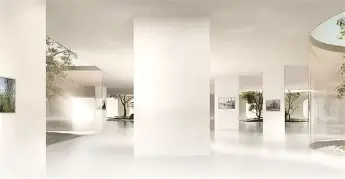
One of the standout design features is the interchangeable bezel system. Users can snap on different colored frames—ranging from a contemporary white to a warm walnut wood finish—allowing the TV to adapt to changing decor. Unlike many screens that look like technology trying to be furniture, the Nxtframe actually achieves the weight and presence of a framed painting. This is bolstered by the screen's anti-reflective coating, which is perhaps the best we have tested in this category. It diffuses direct light sources so effectively that the screen appears like paper rather than glass under mid-day sun conditions.
Picture Quality: The Quantum Dot Advantage
Behind the matte finish and the stylish bezels lies a QLED (Quantum Dot Light Emitting Diode) panel. To understand the performance, we analyzed the display across several critical metrics: color accuracy, peak brightness, and black levels. Because this is a lifestyle TV, there is often a fear that picture quality has been sacrificed for aesthetics. However, our month-long testing revealed a surprisingly capable HDR performer.
Color Reproduction and Saturation
The Quantum Dot layer allows for a wide color gamut, covering over 95% of the DCI-P3 space. In films like Spider-Man: Across the Spider-Verse, the Nxtframe showcased vibrant, punchy colors that didn't feel artificially boosted. The "Art Mode" specifically benefits from this color accuracy, as it attempts to replicate the specific hues of oil paintings and photography. Skin tones remained natural in the "Filmmaker Mode," and the out-of-the-box calibration was impressive, requiring very little adjustment for the average user to achieve a balanced image.
Brightness and Reflection Handling
This is where the Nxtframe Qled truly shines. Most matte screens suffer from a loss of contrast because the light-diffusing layer can make blacks look grey. The Nxtframe combats this with an aggressive local dimming algorithm. While it cannot achieve the "infinite" contrast of an OLED, the peak brightness is high enough (reaching nearly 800 nits in HDR peaks) to create a convincing dynamic range. For users in bright living rooms with many windows, this TV is a superior choice compared to glossy panels. During our testing, we placed the unit directly opposite a large south-facing window. While a standard glass TV would have been obscured by glare, the Nxtframe remained perfectly legible, reflecting only a soft, harmless glow.
Motion and Upscaling
The internal processor handles 4K upscaling with significant finesse. Watching older 1080p content from streaming services resulted in a clean image with minimal noise or artifacts. Motion handling was equally robust, supporting a 120Hz refresh rate. For fast-moving sports like soccer or Formula 1, the "Smooth Motion" settings were competent without introducing the dreaded "soap opera effect" too heavily, provided they were kept at lower intensity levels.
Find top-rated TVs & Home Theater products at great prices.
Shop Amazon →The Art Experience: Integration into the Home
A month of use allowed us to see how the Nxtframe manages its "passive" state. The Art Mode is the centerpiece here. It features a motion sensor and a brightness sensor that work in tandem. When you walk into the room, the TV wakes up to display your chosen artwork; when the room is empty, it powers down to save energy. The light sensor is particularly sophisticated, adjusting the white balance of the digital art to reflect the ambient light of the room. At night, the art dims and warms, mirroring how a physical canvas would look under lamplight.
The inclusion of a vast digital library allows users to rotate through different styles—Renaissance, Modernism, Abstract, and personal photography. We found that uploading high-resolution personal photos through the companion app was seamless. Seeing family portraits displayed in a matte, non-reflective format changed the vibe of the living room, making the technology feel personal rather than cold.
Gaming and Performance
Modern buyers increasingly care about gaming capabilities, even in lifestyle models. The Nxtframe Qled includes HDMI 2.1 ports, supporting 4K at 120Hz, Variable Refresh Rate (VRR), and Auto Low Latency Mode (ALLM). Testing with a PlayStation 5 and an Xbox Series X showed an input lag of approximately 9.5 milliseconds in Game Mode—a Tier-1 result that will satisfy everyone but the most elite competitive players. The matte screen also proved helpful for gaming in the daytime, as dark corners in games like Elden Ring remained visible without being obscured by reflections of the room.
Pros and Cons
- Superior Matte Texture: Effectively eliminates glare and creates a genuine "paper-like" look for digital art.
- Interchangeable Bezels: High-quality magnetic frames allow for instant customization to match interior design.
- Flush Wall Mount: Included hardware ensures the TV sits perfectly flat against the wall, completing the gallery illusion.
- Strong Gaming Feature Set: Participation in the lifestyle segment doesn't mean sacrificing HDMI 2.1 or 120Hz performance.
- Smart Home Integration: Works seamlessly with major voice assistants and features a responsive, clutter-free operating system.
- Black Level Limitations: While good for a QLED, some "blooming" is visible around bright objects in dark scenes compared to OLED rivals.
- Sound Quality: Typical for ultra-thin TVs, the built-in speakers lack deep bass, necessitating a soundbar or external system for a cinematic experience.
- Installation Complexity: To get the true flush-mount look, careful cable management or in-wall wiring is required.
Technical Comparison
To provide a better perspective on where the Nxtframe Qled sits in the current market, we have compared it to standard premium QLEDs and competing lifestyle models across several key specifications.
| Feature | Nxtframe Qled | Standard Premium QLED | OLED Lifestyle Competitors |
|---|---|---|---|
| Screen Surface | Advanced Matte Anti-Glare | Semi-Gloss / Glossy | Glossy |
| Mounting Type | Flush-to-wall Gapless | Vesa Standard (Protruding) | Varies (Usually Protruding) |
| Peak Brightness | High (700-800 Nits) | Very High (1000+ Nits) | Moderate (500-700 Nits) |
| Bezel Customization | Magnetic Interchangeable | Fixed Metal/Plastic | Typically Fixed |
| Refresh Rate | 120Hz | 120Hz / 144Hz | 120Hz |
Buying Guide: Is This the Right TV for You?
Choosing the Nxtframe Qled depends entirely on your priorities as a viewer and a homeowner. It is a specialized product that excels in specific environments but might be over-engineered for others.
Consider the Nxtframe Qled if:
You have a bright living space with many windows. The matte finish is the single most effective tool against glare available today. Furthermore, if you value interior design and find traditional "tech-heavy" living rooms unappealing, this TV is the gold standard for concealment. It is also ideal for those who want a multi-purpose screen that serves as a high-end gaming monitor and a cinematic display but spends 80% of its time as a decorative element.
Discover deals on TVs & Home Theater — updated daily.
Browse Now →Look elsewhere if:
You are a "dark room" purist. If you only watch movies in a dedicated home theater with zero ambient light, you might prefer the absolute black levels of an OLED. While the Nxtframe is excellent, its local dimming cannot completely eliminate the halo effect in extreme contrast scenarios. Additionally, if you plan to use a standard TV stand rather than wall-mounting, you lose half the benefit of the Nxtframe's ultra-thin design.
Installation and Setup Tips
For the best results, we recommend professional installation or a very careful DIY approach. Because the TV is designed to sit flush, any bulge from an ill-placed power outlet can prevent it from hanging correctly. Using the included "One Connect" style cable system is a breeze, but you will need a place to hide the external box that houses the HDMI ports and power supply. Many users hide this in a nearby cabinet or use a recessed wall box behind the TV.
The Verdict: Thirty Days Later
After one month, the Nxtframe Qled has proven itself to be much more than a gimmick. While early "lifestyle" TVs were often criticized for charging a premium price for mediocre hardware, the Nxtframe delivers a robust technical performance that justifies its position. The Quantum Dot panel provides the brightness and color needed for modern HDR gaming and streaming, while the matte coating and bezel system allow it to integrate into a high-end home more gracefully than any other display we've tested.
The "Art Mode" is not just a screensaver; it is a transformative feature that changes the utility of the room. Instead of a dead space on the wall, you have a rotating gallery that responds to the light and movement of your home. While there are minor trade-offs in sheer contrast compared to OLED, the practical benefits of the anti-glare technology in real-world living rooms cannot be overstated. The Nxtframe Qled is a highly successful marriage of form and function, perfect for the modern buyer who refuses to choose between a beautiful home and a high-performance entertainment experience.